
Muslim nonprofits are operating in one of the most competitive giving environments in recent memory. Digital-first charities, global crowdfunding platforms, and instant payment technology have raised donor expectations across the board. At the same time, the core motivations behind Islamic giving such as Zakat, Sadaqah, and community obligation remain as strong as ever.
The challenge is not a lack of generosity. It is getting in front of the right donors, earning their trust, and making it genuinely easy for them to give.
This guide covers the fundraising campaigns and islamic fundraising ideas that are actually working for Muslim nonprofits in 2026, from Ramadan digital ads to mosque QR codes to Google Ad Grants, along with practical guidance on how to use each one effectively.
Why the Old Playbook Is No Longer Enough
For decades, Muslim nonprofits relied on a familiar set of tactics: donation boxes after Jummah, annual dinners, door-to-door Ramadan appeals, and word-of-mouth within local communities. These still have a place, but they are no longer sufficient on their own.
Younger Muslim donors have moved online. They give through apps, crowdfunding campaigns, and social media, and they expect the same level of transparency and convenience they get from any other digital transaction. If your organization cannot receive a donation in under 60 seconds on a mobile phone, you are losing donors who were genuinely ready to give.
The numbers make this clear. American Muslims contributed an estimated $1.8 billion in Zakat in 2021 alone, with more than two-thirds of that given during Ramadan. In Pakistan, Zakat collection in 2024 reached Rs 619 billion (approximately $2.19 billion), surpassing the country’s federal excise revenue for that year. Globally, Zakat potential is estimated at anywhere between $200 billion and $1 trillion annually, yet a significant portion of that never reaches nonprofits at all.
A 2024 donor survey found that many Muslims give directly to individuals rather than institutions because of trust concerns. That is the real gap. The organizations consistently winning at muslim fundraising are not necessarily the ones with the biggest budgets – they are the ones that have earned donor confidence through transparency and consistent communication.
What Separates Fundraising Campaigns That Work From Ones That Don’t
Before getting into individual channels, it helps to understand what the highest-performing Muslim nonprofits in 2026 have in common: they plan well in advance of Ramadan, they build campaigns around one specific goal rather than a general appeal, they use two or three channels together rather than relying on a single platform, and they communicate with donors year-round rather than only during giving seasons.
Digital Ad Campaigns: Paid Fundraising for Muslim Organizations
Paid advertising is one of the most effective ways to run fundraising campaigns for Muslim nonprofits looking to reach beyond their immediate communities. Facebook, Instagram, Google, and YouTube each offer tools that make it possible to find Muslim donors in diaspora communities, among younger professionals, and well outside your city or country.
The platforms have the targeting capabilities, the audiences are there, and the cost-per-click for nonprofit campaigns remains lower than most commercial industries. The main challenge is execution: knowing which platform to use for which goal, and how to structure campaigns so the algorithm works in your favor.
Facebook and Instagram Ads: Low-Budget Ramadan Campaigns That Convert
Facebook’s advertising platform remains highly effective for islamic fundraising, particularly for Ramadan charity fundraising campaigns on a low budget. Nonprofit Facebook ads averaged a median cost-per-click of $0.39 in 2025, well below the platform-wide average, which means even a small monthly budget can generate meaningful reach when campaigns are set up correctly.
Practical tips for Muslim nonprofits running Meta ads:
- Use video over static images: Short, emotionally grounded videos showing real impact consistently outperform polished graphics. During Ramadan, a genuine field update from a beneficiary will outperform a designed banner almost every time.
- Target intentionally: Facebook’s demographic and interest targeting lets you reach Muslims in specific cities, age groups, and diaspora communities. Lookalike audiences built from your existing donor list are particularly efficient for finding new supporters with similar giving patterns.
- Retarget warm audiences: People who visited your donation page but did not complete a gift, or who engaged with a recent post, are your most cost-efficient audience to reach again. These campaigns often deliver the highest return on ad spend of anything you run.
- Time your campaigns around prayer: During Ramadan, engagement spikes around Suhoor, pre-Iftar, and post-Taraweeh. Scheduling your best content and highest-budget ad windows around these times consistently outperforms campaigns running at general hours.
- Keep objectives separate: Running awareness and donation campaigns under the same campaign structure confuses the algorithm. One campaign, one goal, always.
A starting budget of $250 to $500 per month is enough to generate consistent results for most mid-sized Muslim nonprofits. For Ramadan specifically, front-loading spend in the first few days and the last ten nights yields the highest return per dollar.
Real Campaign Results: ICNA Chicago
Numbers in theory are one thing. Here is what a well-executed Meta ads strategy actually produced for a real Muslim nonprofit.
ICNA Chicago had a solid local reputation but limited digital presence. Their social media reach was inconsistent, ad campaigns were underutilized, and most of their digital donor potential was going untapped. They were not struggling because of a lack of community support, they were struggling to translate that support into online donations.
The approach focused on three things: precisely targeted Facebook and Instagram campaigns timed around Ramadan, stronger organic content to maintain engagement between giving peaks, and clear storytelling that gave donors a specific reason to act rather than a general appeal for support.
The results across two consecutive Ramadan campaigns:
- Ramadan 2024: $174,000 raised from $542 in ad spend
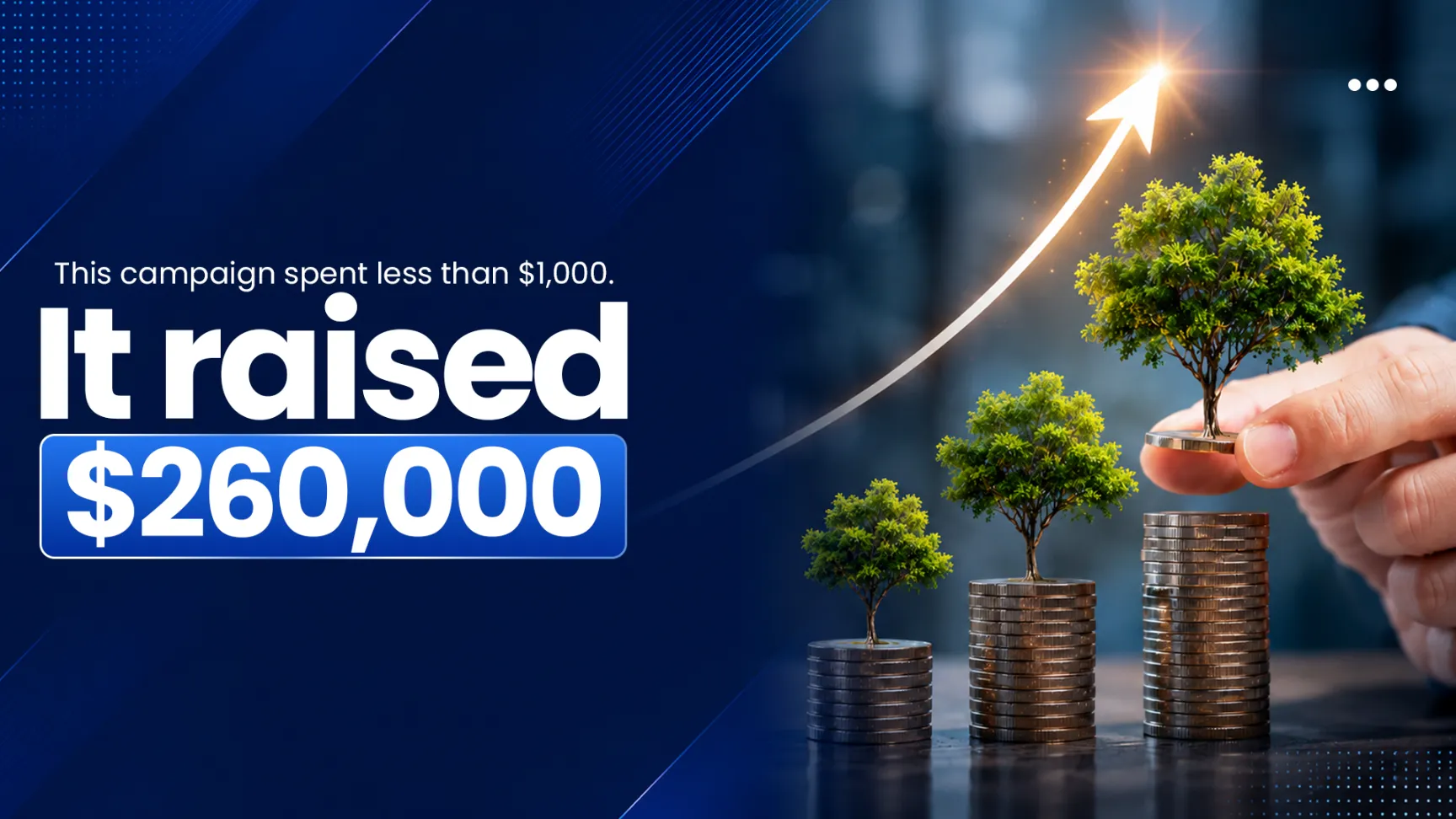
- Ramadan 2025: $260,000 raised from $916 in ad spend
- Facebook reach increased by 222%
- Instagram followers grew by 142%
- 334,000 impressions in the first half of 2025 alone, nearly double their total impressions for the entire previous year
The ad spend-to-donation ratio here is worth pausing on. Under $1,000 producing over a quarter of a million dollars in donations is not a guaranteed outcome for every organization, but it shows what is possible when targeting, timing, and creative are aligned. The bulk of that return came not from the ads themselves, but from what the ads unlocked: a community already inclined to give that simply needed a well-timed reason to act.
🔗 Read the full case: ICNA Chicago Case Study
Google PPC and the Ad Grant for Muslim Organizations
Google’s Ad Grant program gives eligible nonprofits up to $10,000 per month in free search advertising credits. For Muslim nonprofits and Islamic organisations that have not applied yet, this is one of the most underused opportunities in the space.
The grant covers text-based search ads only, which means it works best for capturing intent-driven traffic, people already searching for Zakat calculators, Islamic charities, mosque building fund campaigns or Ramadan giving opportunities. It does not cover display or video ads, so it works best alongside a paid social strategy rather than as a standalone channel.
To make the most of the Ad Grant for your fundraising campaigns:
- Target high-intent keywords like “pay Zakat online,” “Islamic charity near me,” “sadaqah donation [your city],” or “mosque building fund donation.”
- Make sure your landing pages are specific, load quickly on mobile, and have a single clear call to action.
- Maintain a click-through rate above 5% to stay compliant with Google’s grant requirements. Campaigns that fall below this threshold get paused automatically.
- Review performance monthly. Many nonprofits fail to spend even half their monthly Ad Grant allocation because their keyword lists are too narrow or their landing pages are too generic.
- Running this well takes weekly attention, not a one-time setup. If your account is already approved but underspending, or you have not applied yet, our Google Ad Grants management service handles the account build, compliance monitoring and monthly reporting so the grant does not quietly lapse.
Ramadan Fundraising: The Highest-Value Campaign Window of the Year
Ramadan remains the single most important month for Muslim nonprofit fundraising campaigns. The majority of annual Zakat giving happens during this period and donor intent is at its peak, particularly during the last ten nights, when many Muslims increase their giving substantially in the hope of rewards multiplied on Laylatul Qadr.
The nonprofits raising the most during Ramadan are not necessarily the largest or the best-funded. They are the ones that plan earliest, communicate most clearly, and make it easiest for donors to act.
Start planning in Rajab: Waiting until Sha’ban to finalize campaign assets, donation pages, and ad creative is too late. Organizations consistently raising the most during Ramadan begin planning three to four months in advance.
Build the campaign around one specific goal: Vague appeals underperform. “Help us raise $50,000 to provide Iftar meals to 500 families in [location]” is far more compelling than a general Ramadan donation drive. Donors want to know exactly what their money does.
Structure around the Islamic calendar: Run the campaign in three phases: an opening appeal in the first five days, a mid-month update with progress reports and impact stories, and a final push during the last ten nights with specific emphasis on Laylatul Qadr.
Show real-time transparency: Live donation counters, daily updates, and short videos from beneficiaries during the campaign, not just afterward, keep donors engaged and encourage them to share with their own networks.

(Ramadan Facebook Ad campaign results for an Islamic Center, planned and delivered by Mission Managers.)
Ramadan Social Media Challenges and Islamic Giving Campaigns
Social media challenges tied to Ramadan giving have shown strong organic reach for several Islamic nonprofits in recent years. The mechanics are simple: ask donors to give a specific amount, share that they gave, and nominate others to do the same.
What makes these work is the combination of community participation, social proof, and shareability. A well-designed challenge can spread in ways that paid advertising alone cannot replicate.
To run one effectively:
- Give it a clear, memorable hashtag.
- Set a specific donation amount rather than “give what you can”, make it something like “donate $30 to feed one family during Iftar.”
- Partner with two or three respected community voices – an Imam, a local Muslim professional or a known community figure to launch it publicly and create the first wave of momentum.
- Keep the donation process frictionless. Every extra step between “I want to give” and “I have given” reduces conversion.
Outside Ramadan, the first ten days of Dhul Hijjah leading up to Eid al-Adha are the second most important giving window for many Muslim donors. Running a focused islamic fundraising campaign during this period, tied to Qurbani or Sadaqah, typically faces less competition than Ramadan while reaching donors who are spiritually primed to give.
Muslim Crowdfunding Platforms: LaunchGood and the Islamic Fundraising Ecosystem
LaunchGood has established itself as the primary muslim crowdfunding platform globally. Founded in 2013, it has processed hundreds of millions of dollars across thousands of campaigns for mosque construction, emergency relief, scholarships, community programs, and more. In Ramadan 2025 alone, 443,000 donors gave $69 million toward 1,860 fundraisers on the platform.
What makes LaunchGood effective as an islamic fundraising platform is not just the size of its audience, it is the built-in community trust. Muslim donors who might hesitate to give to an unfamiliar nonprofit are far more comfortable donating through a platform they already use and recognize.
Key things to know about running fundraising campaigns on LaunchGood:
- Campaigns with active teams raise roughly twice as much as solo campaigns. Recruiting five to ten team members before launch, each personally reaching out to their own networks, is one of the strongest performance predictors on the platform.
- Around 80% of funds are raised in the first three days and the last three days of a campaign. The middle stretch requires consistent updates, donor stories, and social proof to maintain momentum.
- LaunchGood labels campaigns that are eligible to receive Zakat. This distinction matters because most Islamic scholars do not consider mosque building fund donations Zakat-eligible, so knowing which category your campaign falls into helps set donor expectations correctly and avoids confusion at the point of giving.
- Video storytelling increases campaign performance substantially. Even a basic smartphone video from the field, showing the people your work actually reaches, consistently outperforms polished graphics.
For nonprofits that want to host donations directly on their own website rather than a third-party platform, Donorbox is a strong option. It offers a built-in Zakat calculator, recurring donation setup, and optimized forms designed to reduce drop-off at checkout.
Masjid Fundraising: Jummah Outreach, QR Codes, and Mosque Building Funds
The mosque is still where the Muslim community gathers most consistently, and Friday Jummah prayers represent a recurring fundraising opportunity that most nonprofits dramatically underuse.
The core problem with traditional masjid fundraising is its reliance on cash. Fewer people carry cash now, and a donor who might have given $20 from their wallet will walk past a donation box simply because they have nothing physical on them. QR codes solve this directly. A code printed on a flyer, mounted near mosque exits, or displayed on a screen during Friday prayers links directly to a mobile donation page, and a willing donor can complete a gift in under 30 seconds without needing cash or a card terminal.
For a full seasonal plan built around this, see our 90-day fall fundraising ideas for mosques, which lays out exactly when to run these tactics between August and Giving Tuesday.
Effective masjid fundraising tactics for 2026:
- Coordinate with the Imam: A brief mention of a specific cause during or after the khutbah is significantly more effective than passive signage alone, particularly when the Imam has a genuine relationship with the cause.
- Use donation kiosks at entrances: Kiosks that accept card payments, Apple Pay, and Google Pay are now standard in many larger mosques. For smaller mosques, a tablet running a donation form achieves a similar result at much lower cost.
- Design a simple masjid fundraising flyer: One QR code, one clear campaign goal, one short impact statement. Nothing more. Cluttered flyers get ignored.
- Be specific at the point of giving: “Support our winter food drive! 100 families need your help” outperforms “donate to [organization name].” Specificity increases both conversion rate and average gift amount.
For mosque building fund campaigns specifically, the most effective approach combines an in-mosque QR code presence with a LaunchGood campaign running simultaneously. This gives local worshippers an easy in-person giving option while also capturing online donations from the wider Muslim community.
Building Long-Term Donor Relationships Beyond Ramadan
One of the most consistent weaknesses in Muslim nonprofit fundraising is going silent between campaigns. Donors hear from the organization during Ramadan, perhaps briefly during Dhul Hijjah, and then nothing for months.
Sustained donor engagement outside giving seasons is what separates organizations that grow their donor base year over year from those that essentially restart from zero every Ramadan.
1. Send impact updates, not just appeals: A quarterly email or short video showing what last year’s donations actually accomplished builds far more loyalty than another donation request. Donors who can see their money at work give again. Donors who only receive asks eventually stop opening emails altogether.
2. Offer recurring giving options: Monthly donations, even at small amounts, compound significantly over time and reduce the pressure on seasonal campaigns. Framing a recurring gift in Islamic terms as “Ongoing Sadaqah Jariyah” resonates with many Muslim donors in a way that generic “become a monthly donor” messaging does not.
3. Segment your communications: Zakat donors have different motivations than general Sadaqah donors. Major donors need different communication than first-time givers. Treating your entire donor list identically is a missed opportunity at every level. This is exactly the kind of segmentation a proper donor management system is built to handle.
4. Publish financial transparency: An annual impact report with real numbers, project outcomes, and a breakdown of how funds were used is one of the most effective trust-building actions an Islamic nonprofit can take. A significant portion of Muslim giving bypasses organizations entirely because donors do not trust institutions to use funds responsibly. Consistent, visible accountability is the most effective long-term response to that.
Frequently Asked Questions
Q1. What are the most effective fundraising campaigns for Muslim nonprofits right now?
The ones performing best in 2026 combine at least two channels instead of relying on one. A typical winning setup is Meta ads timed around Ramadan plus a LaunchGood crowdfunding page running at the same time, backed by a masjid QR code for in-person donors. Organizations running single-channel campaigns consistently raise less than those layering two or three together.
Q2. What is islamic fundraising and how is it different from standard nonprofit fundraising?
Islamic fundraising is built around religious giving categories such as Zakat, Sadaqah, and Qurbani, each with its own rules on eligibility and timing. A campaign has to be clear about which category a donation falls under, since many donors will only give Zakat to causes that qualify for it. Standard nonprofit fundraising does not carry that same categorization requirement.
Q3. Is LaunchGood or a website donation page better for islamic fundraising?
Neither replaces the other, they solve different problems. LaunchGood brings in donors who already trust the platform and want to support Muslim causes but have never heard of your organization. A website donation page gives you full control over branding and no platform fee, but it depends entirely on traffic you already have. Most nonprofits that raise the most run both at once.
Q4. Do Google Ad Grants actually work for islamic fundraising campaigns?
Yes, but only for capturing people who are already searching, things like “pay Zakat online” or “sadaqah donation near me.” It will not build awareness among people who are not yet looking for a cause to support. Nonprofits that treat the Ad Grant as their entire digital strategy usually underperform because they are only reaching demand that already exists.
Q5. What makes a mosque building fund campaign different from a general islamic fundraising campaign?
Zakat eligibility is the main difference. Most Islamic scholars do not consider construction and building fund donations Zakat-eligible, which means the campaign has to be framed around Sadaqah instead. Getting this wrong at the point of giving creates confusion and can cost donations from Zakat-only givers who assumed otherwise.
Q6. Can a small Muslim nonprofit compete with large organizations like Islamic Relief for islamic fundraising visibility?
Not on brand search terms, and there is no point trying. Smaller nonprofits win by going after specific, local, high-intent searches instead, things like a city name plus “sadaqah donation,” or a specific cause plus “Ramadan campaign.” The ICNA Chicago example in this guide shows a local organization generating over $250,000 from under $1,000 in ad spend by staying focused rather than competing head-on with national brands.
Q7. How do you keep donors engaged with an islamic fundraising campaign once Ramadan ends?
Send at least two updates a year that are not asking for money, just showing what previous donations actually accomplished. Donors who only ever hear from you when you want something eventually stop opening your emails. Framing recurring gifts as “Ongoing Sadaqah Jariyah” also tends to land better with Muslim donors than generic monthly-donor language.
Q8. Can a small mosque run an islamic fundraising campaign without a big marketing budget?
Yes. A printed QR code and a specific ask during the khutbah cost close to nothing and consistently outperform generic donation boxes. Budget matters far less than specificity “help 100 families this winter” will out-raise “donate to our mosque” every time, regardless of how much is spent promoting it.
Q9. What are the best mosque fundraising ideas to start with in fall?
Start with the lowest-effort, highest-trust ones first: a post-Ramadan donor update, a weekly Jummah announcement tied to one specific need, and a WhatsApp peer-to-peer push. These three mosque fundraising ideas cost close to nothing and build the donor trust needed before a bigger fall campaign or Giving Tuesday push.
What to Prioritize in 2026
If your organization has limited time and budget, these are the highest-leverage starting points right now:
- Apply for the Google Ad Grant if you have not already. Up to $10,000 per month in free search ads is available to eligible nonprofits and largely goes unclaimed.
- Add QR codes to your mosque or event presence. A printed QR code costs almost nothing and removes a real barrier for donors who are ready to give but not carrying cash.
- Run one focused Ramadan campaign built around a specific, measurable goal with a mobile-optimized donation page, not a broad general appeal.
- Send at least two non-ask updates per year to your donor list. Impact communication costs almost nothing to produce and meaningfully improves retention rates.
- Get on LaunchGood if you are not already. The platform’s built-in Muslim donor community is something a standalone donation page cannot replicate, particularly for mosque building fund campaigns and emergency appeals.
The Muslim philanthropic ecosystem is growing. The donors are there and they want to give. The question is whether your organization has built the infrastructure, the trust, and the visibility to capture a meaningful share of that generosity, not just during Ramadan, but consistently throughout the year.